Loved by SMBs, our success thrives on glowing client feedback. Use ReviewsJet, the ultimate social proof, and start your journey with us today.

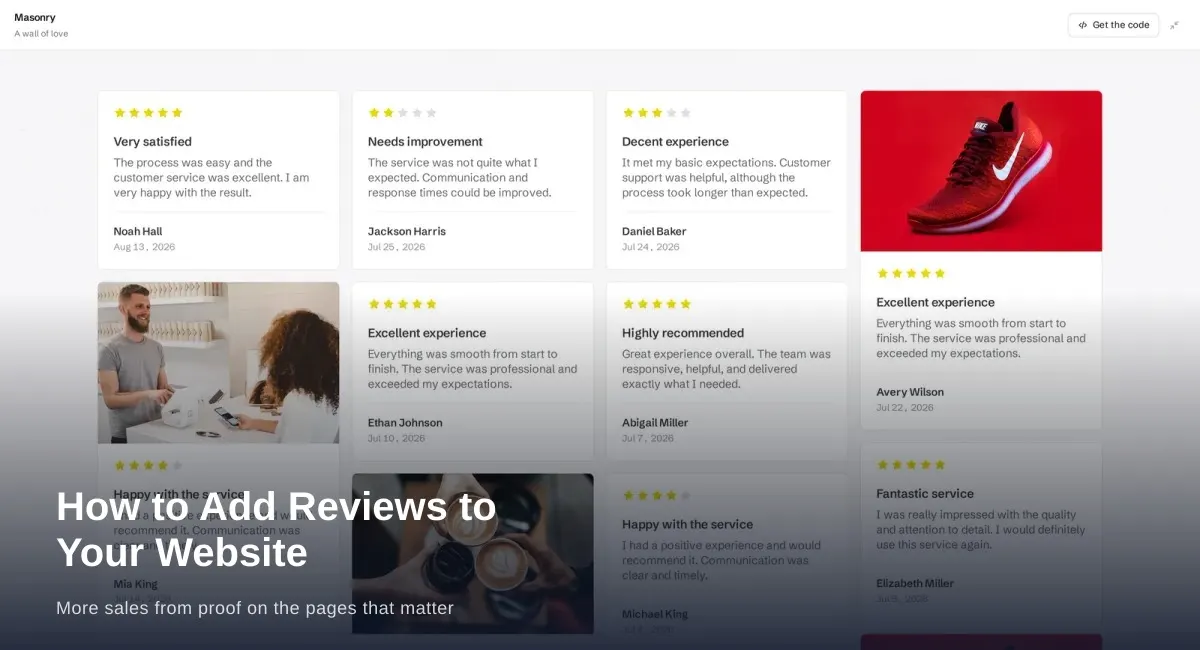
If you want to build trust faster, improve conversions, and make your website more convincing, one of the smartest things you can do is add reviews to website pages.
Customer reviews help visitors feel confident about your business. They show that real people have already bought from you, used your service, or trusted your brand. Instead of asking potential customers to believe your marketing, reviews let your existing customers do the talking.
Whether you run an ecommerce store, agency, SaaS company, local business, or service-based brand, learning how to add reviews to website pages properly can make a big difference in how people respond to your business online.
In this guide, you will learn why reviews matter, where to place them, how to display them effectively, what mistakes to avoid, and how to use them to increase trust and conversions.
When someone visits your website for the first time, they usually have one question in mind:
Your design, copy, and offer all matter, but customer reviews often answer that question faster than anything else.
When you add reviews to website pages, you create instant social proof. Instead of only saying your business is reliable, you show that real customers have already had a positive experience.
That matters because reviews help:
For many businesses, trust is the missing piece between getting traffic and getting conversions. Reviews help close that gap.
To add reviews to website pages means displaying customer feedback directly on your own site rather than leaving it only on third-party platforms like Google, Yelp, or Trustpilot.
This can include:
In simple terms, it means placing customer proof exactly where people are making decisions.
This is important because many visitors will not take the extra step to search for your reviews elsewhere. If they do not see enough proof on your site, they may hesitate or leave.
When you add reviews to website pages the right way, the impact goes far beyond appearance.
Build Trust With New Visitors
Reviews make your website feel more believable. A visitor may not fully trust what a business says about itself, but they are much more likely to trust what customers say.
Reviews can help people move from browsing to buying. A strong testimonial near a call to action can reduce last-minute doubt and help more visitors take action.
Product descriptions and service explanations are useful, but reviews add real-life perspective. They help people understand what it is actually like to buy from you.
Many buyers are not looking for perfection. They are looking for reassurance. Reviews provide that reassurance at the exact moment it matters.
When customer feedback is displayed cleanly and consistently, your brand feels more trusted, transparent, and established.
Many businesses make the mistake of keeping reviews on one page only. A better approach is to place reviews across the site where they can support decisions.
Your homepage is often the first impression people get of your business. Adding reviews here helps establish credibility immediately.
Good homepage placements include:
You do not need to show every review on your homepage. A few strong, relevant reviews are usually enough to build confidence.
If you run an online store, product pages are one of the most important places to add reviews to website content.
Product reviews help shoppers answer questions like:
On product pages, include:
Product reviews can help reduce purchase anxiety and give people the confidence to buy.
Service pages become much stronger when they include client feedback related to that exact service.
For example:
Relevant reviews make the page more persuasive because they match the visitor’s exact interest.
Landing pages should feel highly targeted, and the reviews on them should match that same focus.
If your landing page is built for restaurants, show restaurant reviews. If it is built for agencies, show agency reviews. If it is promoting a specific feature, show reviews that mention that feature.
The more relevant the review, the stronger the impact.
Visitors often hesitate near pricing tables and checkout steps. That is where a short, convincing review can help remove doubt.
A testimonial near pricing can reinforce:
This kind of placement works especially well when the review addresses an objection the buyer may already have.
Not every review format works the same way. A good website usually combines multiple types of review content.
Text reviews are flexible and easy to display. They work well on homepages, service pages, landing pages, and pricing sections.
The best text reviews are specific. They mention what the customer used, what they liked, and what result they got.
Star ratings offer quick visual proof. Visitors can understand them instantly, even before reading the full review.
They work especially well on:
Video testimonials often feel more personal and more believable than plain text because visitors can see and hear the customer.
They are especially effective for:
Photo reviews are especially useful for ecommerce businesses because they show products in real life.
They help answer visual questions and make the experience feel more authentic.
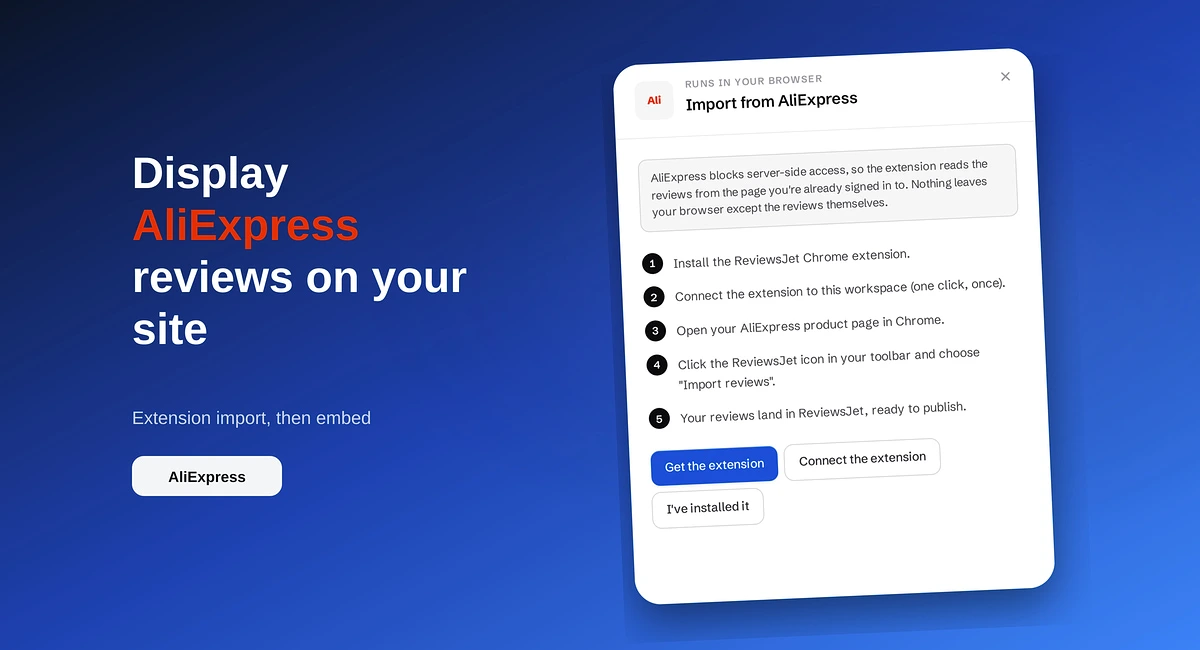
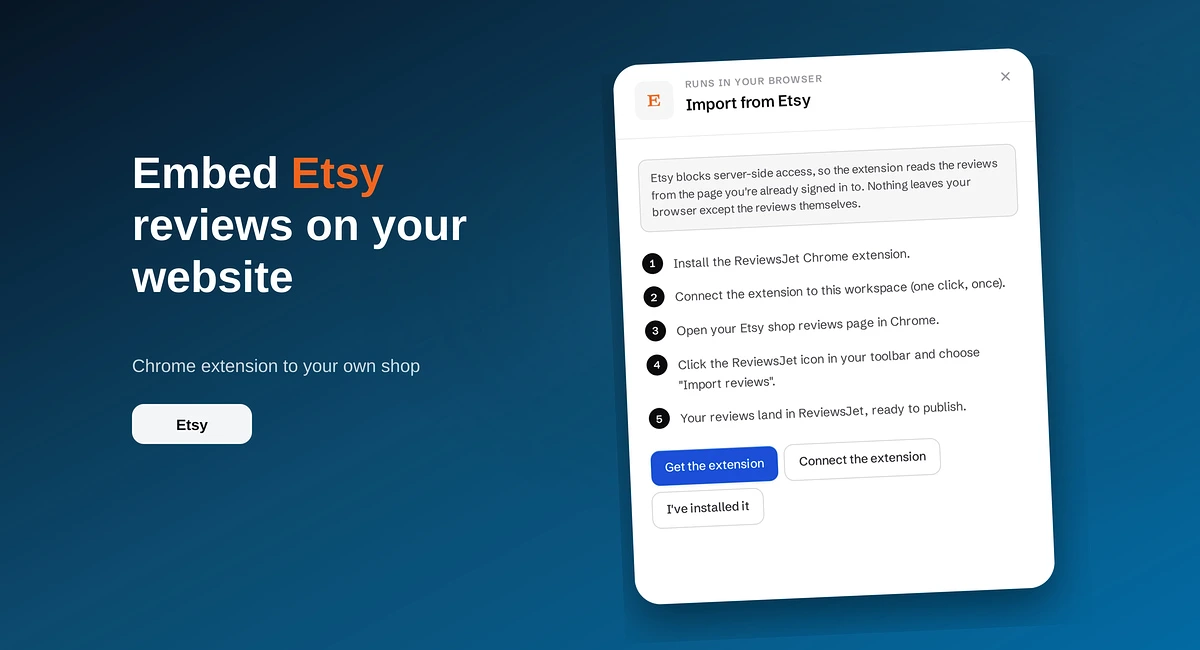
If your business already has reviews on platforms like Google, Trustpilot, Yelp, Airbnb, or TripAdvisor, bringing them onto your website can make your site much more persuasive.
This is one of the fastest ways to strengthen trust because you are using proof you have already earned elsewhere.
It is not enough to simply place a few quotes on your site. The way you present reviews matters a lot.
Strong reviews usually include real details. Generic praise is fine, but detailed reviews are far more convincing.
A useful review often mentions:
For example, “Great service” is okay.
But “We added their review widget to our homepage in minutes and it instantly made the site feel more trustworthy” is much stronger.
A homepage can use general praise, but a product page should show product reviews, and a service page should show service-specific testimonials.
Matching review content to page intent makes your site more persuasive.
Your reviews should be visually easy to scan.
That means using:
Avoid overcrowded review sections or designs that make testimonials feel fake or overly decorative.
Do not display ten reviews that all say the same thing.
A stronger collection includes different themes such as:
Variety helps visitors find the kind of reassurance they personally need.
Fresh reviews feel more believable. If the feedback on your site feels outdated, visitors may wonder whether your business still delivers the same quality today.
Whenever possible, keep new reviews flowing into your site regularly.
Even strong customer feedback can lose impact if it is used poorly.
A dedicated testimonial page is useful, but it should not be the only place reviews appear. Place them across the site where trust matters most.
Anonymous praise without a name, role, or business can feel weak. Even adding a first name and small detail can make a review feel more real.
The most persuasive reviews are often the ones that mention a specific benefit or result.
Walls of text, poor formatting, and weak mobile layouts can reduce the value of otherwise great reviews.
Old reviews can make a website feel neglected. Keep featured reviews updated over time.
Light editing is fine for clarity, but removing the customer’s real voice can make the review feel artificial.
Adding reviews can support SEO when done naturally and helpfully.
When you add reviews to website pages, you often:
Reviews can also naturally include relevant terms, locations, use cases, and product names that strengthen page relevance.
That said, reviews should be added for people first. Do not force keywords into them unnaturally. The goal is credibility and usefulness.
Reviews help people feel safer about taking the next step.
They work because they provide:
People are more likely to trust a business when they see that others already have.
Reviews reduce uncertainty around quality, reliability, and results.
A good review helps visitors picture what success looks like after buying.
At the point of decision, the right testimonial can push someone from hesitation to action.
This is especially valuable for smaller or newer brands that still need to build credibility.
If you want maximum impact, do not treat reviews like decoration. Treat them like conversion assets.
A testimonial next to “Start Free Trial,” “Buy Now,” or “Book a Demo” can improve confidence exactly where it matters.
Short reviews are good for quick trust. Detailed reviews help visitors who want more depth.
A short summary such as “Rated 4.9/5 by hundreds of customers” can help visitors understand the big picture fast.
Reviews that mention outcomes tend to perform better than reviews that only offer general praise.
Examples of useful outcomes include:
Do not hide reviews at the bottom of one page. Use them throughout the customer journey.
Yes, in most cases, this is a smart strategy.
When you bring trusted third-party reviews onto your site, visitors feel they are seeing proof that exists outside your own marketing.
This is especially useful for:
If people already trust those platforms, displaying those reviews on your website helps transfer some of that trust to your own pages.
Before you can display strong reviews, you need a steady system for collecting them.
Some practical ways to get more reviews include:
The easier you make the process, the more likely customers are to leave useful, specific feedback.
Manually copying and pasting reviews can work at first, but it quickly becomes slow and hard to manage.
A better system helps you:
This is especially important if you want your website reviews to stay fresh and relevant without a lot of manual work.
If your website is getting visitors but not converting as well as it should, trust may be the missing piece.
One of the most effective ways to improve trust is to add reviews to website pages throughout the customer journey.
Reviews help people believe your claims.
They reduce hesitation.
They support decisions.
They make your business feel proven.
And when placed well, they can directly help you turn more traffic into leads and sales.
So whether you run a store, service business, agency, or software product, now is a great time to make your customer feedback work harder for your business.
If you want a simple way to collect, import, manage, and display reviews, ReviewsJet helps you add reviews to website pages without the usual hassle.
With ReviewsJet, you can turn customer feedback into trust-building content across your website, whether you want to show testimonials, imported reviews, star ratings, or video reviews.
Instead of leaving your best proof scattered across different platforms, you can bring it together and present it where it actually helps conversions.